
Orlando Scooter Accident Lawyer
Injured in an Orlando scooter accident? Florida's PIP coverage doesn't apply to most scooter riders. We investigate every available source of recovery, from drivers to rental companies. Free consultation.
Millions Recovered
No Fees Unless We Win
24/7 Free Consultation
Bilingual Team (Hablamos Español)
Start your journey to the support you need.
.webp)


.2412131251204%201.svg)

%201.svg)


Scooter Accident Case Outcomes
Our attorneys have secured significant compensation for riders and pedestrians injured in electric scooter accidents across Central Florida.
Left-Turning Vehicle Impact in Downtown Orlando
$
Commercial Van Sideswipe near University Boulevard
$
Unrepaired Commercial Driveway Pavement Defect
$
Rental E-Scooter Mechanical Brake Malfunction
$
A message from our founding attorney louis berk
What Our Personal Injury Clients Say
Being injured on a rented scooter, or as a pedestrian struck by one, is disorienting, especially when it's unclear which company is even responsible. Below, clients we've represented share what it was like to work with our team, from the first call through resolution.


+$
M
No Fee

why we are a top-rated Orlando personal injury firm
Our attorneys are experienced trial lawyers, not just settlement negotiators.
Deep experience with Orange County courts and local insurance adjusters.
You are not a case file. You get direct access to your attorney.
We employ the specialists (accident reconstruction, medical experts) needed to win.
Meet your Orlando Personal Injury Legal Team
%20(1).jpg)
.jpg)

How We Handle Your Scooter Accident Claim
Why you can trust this legal guide
This page is attorney-reviewed and based on real experience handling a wide range of personal injury cases (from catastrophic car accidents to complex premises liability) throughout Central Florida. All information is verified against Florida Statutes and Florida Senate Legal Resources to ensure accuracy and reliability. Reviewed by Louis Berk, Esq., Florida Bar-Licensed Attorney and founder of Louis Berk Law. You can see our verified case outcomes on this page and on our full Case Results page.
Orlando Scooter Accident Lawyer: Fighting for Injured Riders
.webp)
Electric scooters have become part of daily life in Orlando, from International Drive to downtown, but Florida law treats them very differently than the cars and motorcycles they share the road with, and that difference directly shapes how much compensation an injured rider can recover. Under Florida Statute §316.2128, scooters and other micromobility devices are governed by the same rights and duties as bicycles, not motor vehicles, which creates a coverage gap most injured riders never see coming until they're already dealing with the aftermath of a crash.
At Louis Berk Law, we represent Orlando riders, pedestrians, and bystanders injured in electric scooter accidents involving rental companies like Bird, Lime, and Spin, negligent drivers, defective equipment, and hazardous road or sidewalk conditions. We investigate every available source of recovery, since a scooter accident claim rarely has a single obvious insurance policy to turn to the way a car accident does.
Why Florida's No-Fault Insurance Doesn't Cover Most Scooter Riders
Florida's Personal Injury Protection (PIP) system under §627.736 requires coverage for motor vehicle occupants, but an electric scooter does not meet Florida's statutory definition of a motor vehicle. This means the first-party PIP coverage that automatically pays the first $10,000 in medical bills after a car accident, regardless of fault, simply does not exist for most scooter riders. An injured rider is generally left pursuing the at-fault driver's liability coverage, a claim against the rental company, their own uninsured motorist (UM) coverage if a vehicle was involved, or their personal health insurance to cover initial treatment.
This gap catches many riders off guard, particularly visitors renting a scooter for a single trip near the theme park corridor who assume some baseline insurance automatically applies the way it does with a rental car. Identifying every available source of coverage early is one of the most important parts of building a scooter accident claim in Orlando. In practice, this often means layering several potential sources together, a driver's bodily injury liability policy, the rider's own UM coverage, personal health insurance for immediate treatment, and a possible claim against the rental company or manufacturer, rather than relying on any single policy to cover the full extent of the injury.
Who Can Be Held Liable in an Orlando Scooter Accident
Because scooter accidents rarely involve a single clear insurance policy, identifying every potentially liable party is central to recovering full compensation. A negligent driver who failed to yield, made an unsafe turn, or was distracted while a scooter was legally sharing the road or crossing a driveway is the most common at-fault party in collision cases. The rental company itself, Bird, Lime, Spin, and similar operators, can be liable for negligent fleet maintenance, deploying a scooter with a known mechanical defect, or failing to remove a damaged unit from circulation after receiving complaints.
A manufacturer can be liable separately from the rental company under product liability principles when a design or manufacturing defect, a failing brake system, a throttle that sticks, causes the crash, regardless of how well the rental company maintained the unit. Property owners and government entities can be liable when a hazardous sidewalk, an unsecured construction plate, or inadequate signage on a path designated for scooter use contributed to the accident. Identifying every one of these parties early matters because each carries a different insurance picture, and a claim built against only the most obvious defendant, typically the other driver, can leave significant available compensation unclaimed when a rental company or manufacturer also bears responsibility. Our team secured $210,000 for a scooter rider who suffered a fractured radial head and torn shoulder labrum after being thrown over the handlebars due to an unmaintained, unmarked six-inch asphalt depression at the entrance of a commercial plaza.
Rental Company Liability Waivers: What They Actually Cover
Every major scooter rental company requires riders to accept an app-based liability waiver and, in many cases, an arbitration clause before unlocking a scooter. These agreements are designed to limit the company's exposure, but they are not absolute. Florida courts scrutinize broad liability waivers, and a waiver generally cannot shield a company from liability for its own gross negligence or for injuries caused to third parties who never agreed to the company's terms at all, a pedestrian struck by a rider, for example, has no contractual relationship with the rental company whatsoever.
Arbitration clauses embedded in these agreements can also affect where and how a claim against the rental company itself gets resolved, potentially routing a dispute out of court and into private arbitration. Understanding exactly what a specific rental agreement says, and where its limits actually fall under Florida law, is a necessary early step in any claim involving a rented scooter. This analysis becomes even more important when a pedestrian or another non-renter is injured by a scooter rider, since that injured party never agreed to any of the app's terms and is not bound by an arbitration clause or liability waiver they never saw, let alone accepted.
What Scooter Accident Claims Are Typically Worth
These ranges reflect real outcomes. Our team recovered $425,000 for an electric scooter rider who sustained a concussion, complex clavicle fracture, and severe road rash requiring surgical hardware after an oncoming passenger vehicle made an improper left turn across Orange Avenue in downtown Orlando, and secured $320,000 for a commuter riding an e-scooter who suffered torn knee ligaments and lumbar disc herniations when a commercial courier van passed too closely and sideswiped the rider near University Boulevard.
Which Florida Laws Apply to Your Scooter Accident Claim?
Under §316.2128, scooter operators generally have the same rights and duties as bicycle riders under §316.2065. Riders must be at least 16 years old, but Florida does not require a driver's license, registration, or insurance to operate a scooter, and riders 16 and older are not legally required to wear a helmet, though failing to do so can still be used by an insurer to argue comparative negligence if a head injury results.
Since HB 837 took effect in March 2023, Florida applies a modified comparative negligence rule under §768.81: if you are found more than 50% at fault, you recover nothing. HB 837 also shortened Florida's statute of limitations for most negligence claims from four years to two years under §95.11. For claims against a scooter manufacturer specifically, Florida's product liability framework, including the statute of repose we cover in detail on our product liability page, may also apply.
Mechanical Failure Claims: A Distinct Path to Recovery
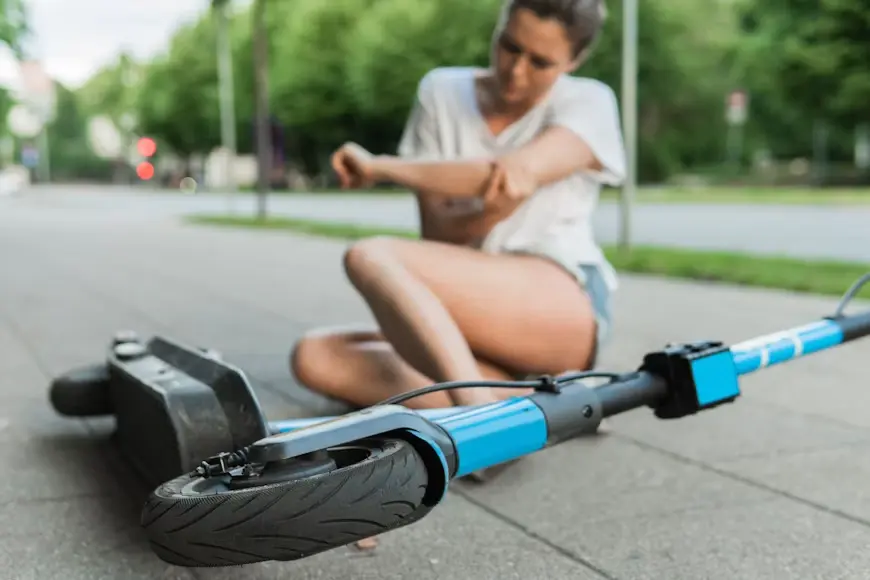
When a scooter accident results from a mechanical failure, a brake that fails to engage, a throttle that sticks open, a battery that malfunctions, the injured rider may have a product liability claim entirely separate from any claim against a driver. Under Florida's strict liability doctrine, established in West v. Caterpillar Tractor Co., an injured rider does not need to prove the manufacturer or rental company was careless, only that the scooter was defective and unreasonably dangerous, and that the defect caused the injury.
Investigating a mechanical failure claim typically requires preserving the specific scooter involved, which can be difficult given that rental scooters are constantly redeployed across a city. Acting quickly to identify the scooter's unit number and request its maintenance history from the rental company is often essential before that evidence becomes unavailable. Our team recovered $180,000 for a tourist who sustained a broken wrist requiring pin fixation and post-concussion symptoms after a rental scooter's electronic brake system failed completely on an incline near International Drive.
Why Orlando's Tourist Corridor Shapes These Claims Differently
A significant share of Orlando's scooter rentals happen near International Drive, the theme park corridor, and downtown entertainment districts, areas that draw visitors unfamiliar with both the specific scooter and Florida's traffic patterns. Out-of-state and international visitors injured while riding often return home before treatment concludes, which makes prompt evidence preservation, screenshots of the rental app trip data, photographs of the scene, and witness contact information, particularly important before they leave the area. Coordinating a claim for a visitor who has already returned home requires managing medical documentation and communication across state or national lines, a logistical challenge that differs meaningfully from representing a local rider who can simply return to a nearby doctor's office for follow-up care.
Scooter, Moped, or Motorcycle? Why the Classification Matters
Not every two-wheeled electric device on Orlando's streets falls under the same legal category, and getting this classification right at the start of a case affects which insurance framework applies. A standard rental e-scooter, capped at low speeds and lacking a seat designed for sitting while riding, generally falls under §316.2128's bicycle-based framework. A moped or a higher-powered electric device capable of greater speeds can cross into Florida's separate motor vehicle or motorized bicycle classifications, which carry their own registration, insurance, and PIP implications entirely different from a standard scooter. Misclassifying the device involved, whether by an insurer looking to deny a claim or simply through confusion about a newer product category, can materially change what coverage is actually available, which is why confirming the specific device's legal classification is one of the first things we do when evaluating a new scooter case.
Sidewalk Riding, Local Ordinances, and Right-of-Way Disputes
Orlando and the surrounding municipalities each maintain their own local ordinances layered on top of §316.2128's baseline rules, governing where scooters may be ridden, on sidewalks, in bike lanes, or only on streets, and where they may be parked once a ride ends. These local rules matter directly in a liability dispute: a rider using a sidewalk in violation of a local ordinance may face a comparative negligence argument from the defense, while a driver who fails to check a bike lane before turning across it, where scooters are legally permitted, faces the opposite argument. Because these ordinances can differ block by block depending on the municipality, confirming the specific local rule that applied at the crash location is a necessary part of building the liability case, not an assumption to be made from general statewide law alone. Our team obtained $145,000 for a client riding in a designated bike lane who suffered facial lacerations, dental trauma, and a wrist fracture when a parked motorist opened a car door directly into the rider's path without checking mirrors, a scenario known as "dooring."
Nighttime Visibility and Multiple-Rider Violations
A significant share of the scooter accidents we investigate happen after dark, when a rider's visibility to drivers drops considerably, particularly for scooters without adequate reflectors or lights. Florida law requires bicycle-classified devices, which includes standard scooters under §316.2128, to be equipped with a lamp visible from the front and a reflector visible from the rear during nighttime hours. A rental company's failure to maintain functioning lights on its fleet, or a rider's failure to use a personal light when required by local ordinance, can each become a contested fact in a nighttime accident case.
Multiple-rider violations are another recurring factor in Orlando scooter accidents, particularly among younger riders and tourists who assume a single rented scooter is designed to carry two people. Most rental scooters are built and rated for a single rider, and exceeding that capacity affects both the device's stability and, potentially, a rider's own comparative negligence exposure if the added weight or imbalance contributed to the crash. Rental company terms of service typically prohibit multiple riders explicitly, and a violation of that term can itself become part of the comparative negligence analysis even when the added rider was not the one who ultimately controlled the scooter.
Wrongful Death Claims Following a Fatal Scooter Accident
When a scooter accident results in death, often from a collision with a vehicle or a severe head injury from an unhelmeted fall, Florida's Wrongful Death Act allows the deceased's personal representative to pursue compensation on behalf of surviving family members. These cases carry the same multi-party liability analysis as a survivable scooter injury claim, the driver, the rental company, and potentially the manufacturer, each evaluated for their respective contribution to the fatal outcome. Fatal scooter accidents involving a visitor from out of state or abroad add their own coordination challenges, since the personal representative appointment process and evidence gathering often have to proceed while the family is grieving thousands of miles away from where the incident occurred. Our Orlando wrongful death lawyer team handles these claims with the same thoroughness applied to any fatal accident case.
What Compensation Can Injured Riders Recover?
Florida personal injury law allows recovery of both economic and non-economic damages once a claim clears the applicable legal threshold. Economic damages include past and future medical expenses and lost wages. Non-economic damages cover pain and suffering and loss of enjoyment of life. Claims involving a manufacturing defect can also support punitive damages in cases where the evidence shows the manufacturer knew about a defect and continued selling or deploying the product regardless.
What to Do After a Scooter Accident in Orlando
- Photograph the scooter, the scene, and your injuries. Include the scooter's unit number or QR code, since this identifies the specific device and its maintenance history.
- Save your rental app trip data. Screenshots of the ride details, timestamps, and route can become important evidence before an app resets or a trip record becomes harder to access.
- Seek medical care promptly, even for injuries that seem minor. Road rash and joint injuries can mask more serious underlying trauma, and a documented visit close to the accident date strengthens the claim.
- Do not sign anything from the rental company beyond what was already required to rent the scooter. Some companies attempt to obtain additional releases after an accident.
- Avoid a recorded statement with any insurer before speaking with an attorney. Given how many parties can be involved, an early statement can complicate a claim before liability is fully understood.
For related injury types that often overlap with scooter accident claims, see our Orlando motorcycle accident lawyer, Orlando bicycle accident lawyer, and Orlando pedestrian accident lawyer pages.
How Louis Berk Law Handles Scooter Accident Cases
.webp)
When we take on a scooter accident case, we move quickly to identify the specific rental unit involved and preserve its maintenance and complaint history before that evidence disappears back into a redeployed fleet. We evaluate every potential source of recovery, the driver, the rental company, the manufacturer, and available UM coverage, rather than assuming a single insurance policy will cover the full value of the claim. Attorney Louis Berk reviews every case personally, and we understand how Florida's bicycle-based legal framework for scooters, combined with the PIP coverage gap, changes the strategy compared to an ordinary car accident claim.
We have handled scooter accident claims throughout Central Florida, including cases involving both local riders and visitors injured near the theme park corridor. Given the mix of local riders and out-of-town visitors involved in Orlando scooter accidents, we regularly coordinate treatment records and evidence across state lines when an injured rider has already returned home before their claim is fully resolved. Attorney Louis Berk reviews every claim personally, and our team stays current on how Orlando and its surrounding municipalities continue to update their local scooter ordinances as this mode of transportation keeps growing. You can review our case results to see how we've approached similar claims.
Disclaimer: This page is for general informational purposes only and does not constitute legal advice. Every case is different. For advice about your specific situation, contact a licensed attorney. Prior results do not guarantee a similar outcome.


Frequently Asked Questions
What if a scooter accident resulted in a death?
Are scooter riding rules the same everywhere in Orlando?
What if I was riding double with a friend when the accident happened?
How long do I have to file a claim after a scooter accident in Florida?
What if I was hit by a scooter rider while walking?
Do I need a helmet to ride legally in Florida?
Can I sue Bird or Lime if their scooter malfunctioned?
Does my car insurance cover me if I'm injured on a rental scooter?
***By providing a telephone number you are consenting to be contacted by SMS text message. Message & data rates may apply. You can reply STOP to opt-out of further messaging and get more help by sending HELP.
