
Orlando Bicycle Accident Lawyer
Hit by a car while riding in Orlando? We push back against insurers who try to blame the cyclist and pursue full compensation for medical bills, lost wages, and pain and suffering under Florida law.
Millions Recovered
No Fees Unless We Win
24/7 Free Consultation
Bilingual Team (Hablamos Español)
Start your journey to the support you need.



.2412131251204%201.svg)

%201.svg)


Bicycle Accident Results - Orlando & Central Florida
Orlando cyclists face some of the most dangerous roads in the country. Louis Berk Law fights to hold negligent drivers accountable and recover every dollar our clients deserve.
Left-Turn Collision, Fractured Collarbone and TBI
$
Dooring Incident, Road Rash and Broken Wrist
$
Child Cyclist Struck by Distracted Driver
$
Hit and Run, Spinal Injuries
$
A message from our founding attorney louis berk
Orlando Personal Injury Client Testimonials
Every bicycle accident case involves different injuries and a different path to recovery. Below, clients we've represented share what it was like to work with our team, from the first phone call to the resolution of their claim.


+$
M
No Fee

why we are a top-rated Orlando personal injury firm
Our attorneys are experienced trial lawyers, not just settlement negotiators.
Deep experience with Orange County courts and local insurance adjusters.
You are not a case file. You get direct access to your attorney.
We employ the specialists (accident reconstruction, medical experts) needed to win.
Meet your Orlando Personal Injury Legal Team
%20(1).jpg)
.jpg)
How We Handle Your Bicycle Accident Claim
Why you can trust this legal guide
This page is attorney-reviewed and based on real experience handling a wide range of personal injury cases (from catastrophic car accidents to complex premises liability) throughout Central Florida. All information is verified against Florida Statutes and Florida Senate Legal Resources to ensure accuracy and reliability. Reviewed by Louis Berk, Esq., Florida Bar-Licensed Attorney and founder of Louis Berk Law. You can see our verified case outcomes on this page and on our full Case Results page.
Bicycle Accident Lawyer in Orlando, Florida

Florida has recorded more bicyclist fatalities than any other state over the past five years, and Orlando, despite its 265 miles of dedicated bike lanes, remains one of the most dangerous cities in the state to ride. With over 75 million visitors arriving in 2018, many unfamiliar with Florida bicycle laws, out-of-state drivers share the road with local commuters and recreational cyclists every day. As an Orlando bicycle accident attorney, Louis Berk Law represents injured cyclists across Central Florida and fights to hold negligent drivers accountable. Our team handles cases in English and Spanish: hablamos español.
Florida's Bicycle Accident Crisis: The Numbers Behind the Risk in Orlando
Florida has the highest rate of bicycle fatalities of any state in the country, and Orange County, home to Orlando, recorded 682 bicycle crashes in 2025, resulting in 646 injuries. The danger is documented and persistent.
Between 2019 and 2023, Florida averaged 197 bicyclist fatalities per year, the highest rate of any state in the nation, according to the League of American Bicyclists Benchmarking Report released in December 2024. In 2024 alone, 207 cyclists died on Florida roads. Orange County saw 534 bicycle crashes in 2023, with 13 fatalities and 514 injuries. By 2025, that number climbed to 682 crashes.
Orlando holds a "Bicycle Friendly Community" designation from the League of American Bicyclists, and the city has invested in 265 miles of bike infrastructure. The infrastructure exists. The enforcement does not. Florida's 3-foot safe passing rule under §316.2065 requires drivers to maintain at least three feet of clearance when passing a cyclist. In all of 2024, only 130 drivers in the entire state were cited for violating this rule. That is a law without meaningful enforcement on the street.
The legal significance of this gap matters: a violation of the 3-foot rule is a moving violation under Florida law. In a bicycle accident case, evidence that a driver passed too closely can establish negligence per se, even if no citation was issued at the scene. When we review bicycle accident cases in Orlando, one of the first things we look for is whether the driver violated the 3-foot passing rule. A moving violation is evidence of negligence. The problem is that most drivers are never cited, even after a crash.
What Florida Law Says About Your Rights as a Cyclist
Under Florida Statute §316.2065, cyclists operating on public roads have the same rights and responsibilities as motor vehicle operators, which means drivers are legally required to share the road, yield right of way, and maintain a safe distance when passing.
This is not optional. A cyclist on a public road in Florida has the same legal standing as a driver in a car. When a motorist fails to yield, passes too closely, or strikes a cyclist, the same rules of negligence apply.
Cyclists must ride as close as practicable to the right side of the road (with exceptions for narrow lanes, left turns, or hazards), use front and rear lights at night, and ride no more than two abreast if it impedes traffic. Under Florida Statute §316.1925, drivers must exercise due care to avoid colliding with any cyclist, including at intersections, while passing, and while making turns.
Helmet law: Only cyclists under 16 are legally required to wear a helmet in Florida under §316.2065(18). Adults are not required by law. The insurer will use the absence of a helmet as a comparative fault argument in head injury cases, especially under HB 837's 50-percent bar. For child cyclists, the helmet requirement is absolute, and the statute of limitations may be tolled under §95.051 until the child turns 18.
In almost every bicycle accident case we handle, the at-fault driver's insurer argues the cyclist did something wrong: riding too far from the curb, not signaling, not wearing a helmet. Florida law addresses each of these arguments specifically. Knowing the statute is often the difference between a lowball settlement and full compensation.
Common Types of Bicycle Accidents in Orlando
Most Orlando bicycle accidents are caused by driver negligence, not cyclist error. Left-turn crashes, dooring by parked vehicle occupants, distracted driving in tourist corridors, and unsafe passing are the leading causes, and each creates clear legal liability for the at-fault driver.
Left-turn crashes are the most common type of car-bicycle collision. A driver making a left turn at an intersection fails to see the oncoming cyclist and turns directly into their path. The driver making the turn has the legal duty to yield.
Dooring accidents occur when someone in a parked vehicle opens their door directly into the path of an approaching cyclist. The impact at normal cycling speed can throw the rider into active traffic. The person who opened the door can be held responsible under the duty of care established in §316.1925.
Distracted driving is a persistent factor in Orlando. Florida's texting ban under §316.305 targets one form of distraction, but tourists navigating with GPS in rental vehicles along International Drive and the theme park corridors create an environment where distracted driving is widespread.
Unsafe passing within three feet of a cyclist is a moving violation under §316.2065. It is especially dangerous on roads without bike lanes or where bike lanes are narrow and poorly maintained.
Hit-and-run accidents leave the cyclist injured with no identifiable driver. If the cyclist has UM coverage on a personal auto policy, that coverage can apply. Reporting to police immediately is essential.
Road hazards and poor infrastructure including potholes, debris, discontinued bike lanes, and construction zones without adequate signage can cause serious crashes. Claims against the government entity responsible require a pre-suit notice under §768.28 within three years of the incident.
Tourist driver danger is specific to Orlando. The city received over 75 million visitors in 2024, many driving rental vehicles with little familiarity with Florida bicycle laws or the presence of cyclists on local roads.
Drunk driving accidents are a persistent risk in high-density entertainment areas. International Drive, Downtown Orlando, and corridors near theme parks have significant concentrations of bars and restaurants. Cyclists riding at night in these areas face heightened exposure to impaired drivers.
E-Bike Accidents in Orlando: New Technology, New Legal Questions
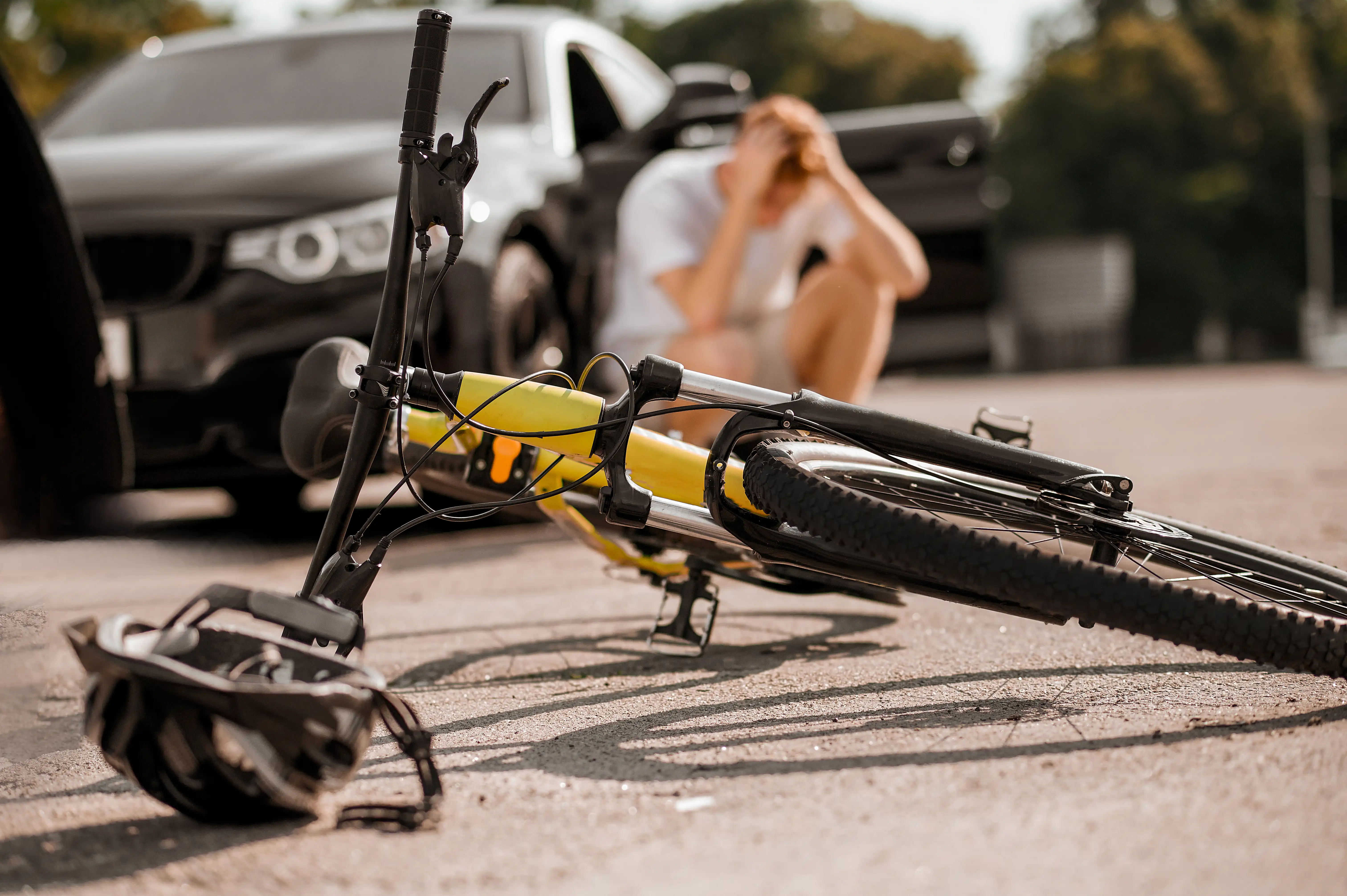
E-bike accidents in Orlando follow the same Florida negligence laws as regular bicycle accidents, but rental e-bike operators, equipment manufacturers, and ride-share platforms may bear additional liability that does not exist in a standard bicycle crash.
E-bikes are increasingly common across Orlando: in tourist areas along International Drive and near theme parks, in residential neighborhoods like College Park, Audubon Park, and Thornton Park, and as commuter transportation. Florida Statute §316.003 classifies e-bikes into three categories with distinct rules:
Class 1 (pedal assist, maximum 20 mph) can use bike lanes and most bicycle paths. Class 2 (throttle-powered, maximum 20 mph) can use bike lanes. Class 3 (pedal assist, maximum 28 mph) may face access restrictions on certain bike paths.
When the accident involves a rental e-bike (Lime, Bird, or a hotel shuttle service), the operator of the rental service may share liability if the equipment had defects, if the battery was improperly maintained, or if the operator failed to provide adequate safety instructions.
E-bike accident cases in Florida are evolving quickly. When a client contacts us after an e-bike crash, one of our first questions is: was it your bike or a rental? If it was a rental, the operator may bear responsibility for equipment maintenance, battery safety, and rider instruction, and that changes the legal strategy significantly.
What Injuries Do Bicycle Accident Victims Suffer?
Bicycle accident injuries are among the most serious in personal injury law because cyclists have no protective shell. Road rash, traumatic brain injuries, fractures, and spinal cord damage are common outcomes, and recovery can require months or years of treatment.
Road rash occurs when a cyclist is thrown from the bike and slides across pavement. It can range from surface abrasion to deep tissue destruction requiring skin grafts, wound care, and resulting in permanent scarring.
Traumatic brain injury (TBI) can occur with or without a helmet. The force of impact against pavement or a vehicle can cause concussions, cerebral hemorrhaging, and diffuse axonal injury, all of which can result in permanent cognitive impairment.
Fractures to the face, jaw, teeth, collarbone, and wrist are common. The face is often the first impact point in a bicycle crash, and riders instinctively brace falls with outstretched arms, resulting in collarbone and wrist fractures.
Spinal cord injuries can result in partial or complete paralysis, requiring lifetime medical care.
PTSD and psychological trauma affect many cyclists after serious crashes. The loss of confidence to ride again belongs in every damages calculation.
In fatal crashes, the family can file a wrongful death claim. Our Orlando wrongful death lawyer team handles those cases. Our pedestrian accident lawyer page covers similar claims for vulnerable road users.
What Compensation Can Bicycle Accident Victims Recover in Florida?
Bicycle accident victims in Florida can recover compensation for all medical expenses, lost income, bicycle replacement, and pain and suffering, but because cyclists typically do not have Personal Injury Protection coverage, pursuing those damages requires proving the driver was at fault.
Economic damages include past and future medical bills (emergency care, surgery, rehabilitation, physical therapy), lost wages during recovery, diminished earning capacity, and replacement of the bicycle and equipment (helmet, clothing, accessories).
Non-economic damages include pain and suffering, emotional distress, loss of enjoyment of life (including cycling itself), PTSD, and scarring. In fatal cases, the family can pursue a wrongful death claim for funeral expenses, loss of companionship, and economic dependency.
A note on insurance: if you have PIP on a personal auto policy, Florida law may allow you to apply that coverage to your bicycle accident injuries. If you do not have PIP, compensation must come from the at-fault driver's liability insurance or from your own UM/UIM coverage.
Under HB 837's 50-percent comparative fault bar, if the cyclist is found more than 50 percent at fault, compensation is zero. This is why building a strong liability case against the driver from day one is essential. As your personal injury attorney in Orlando, our car accident attorney in Orlando team handles the intersection between vehicle and cyclist claims. For a broader look at how settlements work, read our personal injury settlement guide.
How HB 837 Changed Bicycle Accident Claims in Florida
Since HB 837 took effect on March 24, 2023, Florida bicycle accident victims have two years to file a lawsuit, and if a jury finds the cyclist more than 50 percent at fault, the cyclist receives nothing, which makes how the case is documented and argued more critical than ever.
The filing deadline under Florida Statute §95.11 dropped from four years to two years for accidents occurring on or after March 24, 2023. The modified comparative negligence bar under §768.81(6) means that if the insurer succeeds in shifting 51 percent or more of fault onto the cyclist, the recovery is zero.
Insurance companies use this aggressively against cyclists, alleging the cyclist was riding against traffic, failed to signal, ignored a stop sign, lacked reflective clothing, or was not wearing a helmet (legal for adults in Florida, but used as a fault argument in head injury cases).
Evidence that counters these arguments, traffic camera footage, dashcam recordings, business surveillance video, and witness statements, degrades or disappears within 24 to 72 hours. Waiting to contact an attorney means losing the evidence that protects your case.
For child cyclists, the statute of limitations may be tolled under §95.051 until they turn 18, and if a government entity is responsible for a dangerous road condition, a separate pre-suit notice under §768.28 must also be filed within three years.
What to Do Immediately After a Bicycle Accident in Orlando
After a bicycle accident in Orlando, get medical care first, then call 911, document the crash scene thoroughly, preserve your bicycle and gear as physical evidence, and contact an attorney before making any statements to the at-fault driver's insurance company.
Get medical care immediately. Traumatic brain injuries and fractures do not always cause pain at the scene. Adrenaline masks serious injuries. Same-day medical documentation connects your injuries to the crash.
Call 911. A crash report is essential. Without it, the insurer may treat the incident as if it never happened.
Document everything. Photograph the bicycle, the vehicle, the intersection, the bike lane, road conditions, skid marks, and your injuries from multiple angles.
Preserve your bicycle. The bicycle is physical evidence. Do not repair or clean it. The damage pattern can prove the point of impact and direction of the collision.
Gather witness information. In tourist areas of Orlando, witnesses leave quickly. Get names and phone numbers at the scene.
Get the driver's information. License, plate number, name, and insurer. If the driver flees: record any partial plate number, vehicle description, and direction of travel.
Do not give statements. Do not admit fault or discuss your cycling behavior with the driver, the police (beyond the facts), or any insurance representative.
Contact Louis Berk Law immediately. Preservation letters for traffic camera footage, business cameras, and dashcams must go out within 24 to 48 hours.
In bicycle accident cases, preserving the bike itself is something many clients overlook. We have had cases where the damage pattern on the handlebars and frame was the clearest evidence of exactly how the collision happened and who was in whose lane. If the bike is repaired before we inspect it, that evidence is gone forever.
How Louis Berk Law Fights for Bicycle Accident Victims in Orlando
At Louis Berk Law, we represent bicycle accident victims throughout Central Florida on a contingency fee basis. You pay nothing unless we recover compensation for you. Our bilingual team handles cases in English and Spanish from start to finish.
Attorney Louis Berk has represented cyclists injured across Orange, Seminole, Osceola, and Volusia counties, including cases involving dooring accidents, hit-and-runs, e-bike rental crashes, and collisions caused by distracted tourist drivers. We do not start from the assumption that the cyclist was at fault. We start from the evidence.
Our process: we send preservation letters for camera footage within 24 to 48 hours, document road conditions before repairs are made, identify all liable parties, and build a case that resists the insurer's attempts to shift blame onto the cyclist.
Our team serves Orlando, Deltona, and communities across Central Florida. If you are a cyclist who speaks Spanish and want your case handled entirely in your language, our Spanish-speaking attorney in Orlando team is ready. Si prefieres hablar sobre tu caso en español, nuestro equipo está aquí para ti desde la consulta inicial hasta la resolución. Hablamos español.
Contact us for a free case review. No fees unless we win.
Disclaimer: This page is for general informational purposes only and does not constitute legal advice. Every case is different. For advice about your specific situation, contact a licensed attorney. Prior results do not guarantee a similar outcome.


Frequently Asked Questions
How much does a bicycle accident lawyer in Orlando cost?
Can I file a claim if a pothole or road defect caused my bicycle accident in Florida?
What happens if the driver who hit me fled the scene?
Does Florida's no-fault PIP insurance apply to bicycle accidents?
What is the 3-foot safe passing rule in Florida, and how does it help my case?
Can I recover compensation if I was not wearing a helmet in Florida?
How long do I have to file a bicycle accident lawsuit in Florida?
Do I need a lawyer for a bicycle accident in Florida?
***By providing a telephone number you are consenting to be contacted by SMS text message. Message & data rates may apply. You can reply STOP to opt-out of further messaging and get more help by sending HELP.
