


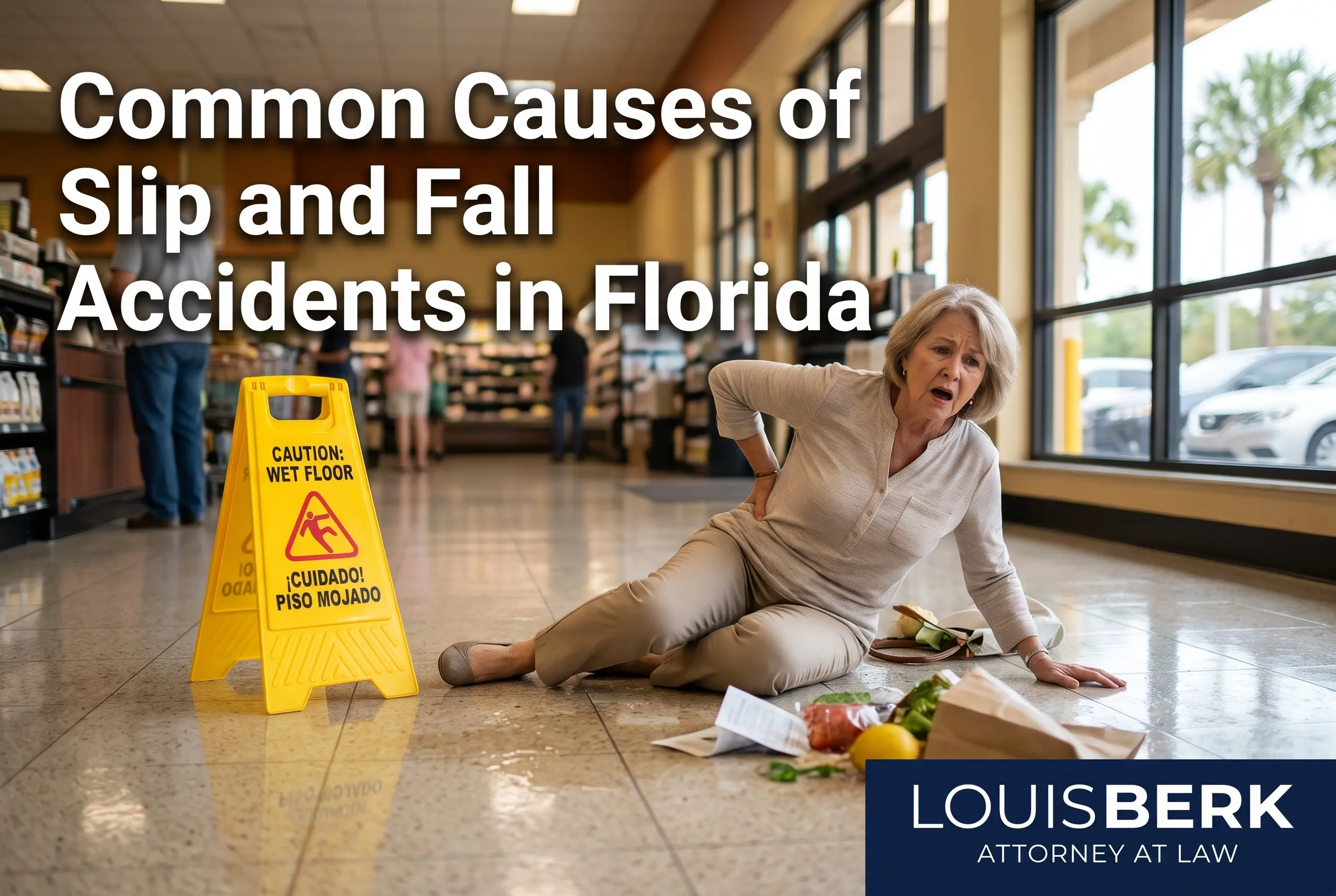
Key Takeaways: Causes of Slip and Fall Accidents in Florida
- Wet floors, uneven surfaces, poor lighting, damaged stairs, clutter, and weak maintenance cause most Florida slip and fall accidents.
- A fall on a spill in a business requires proof of actual or constructive knowledge under §768.0755.
- Constructive knowledge exists when a hazard sat long enough for reasonable care to find it, or occurred with regularity.
- Permanent defects such as cracked walkways and broken stairs follow general premises liability rules, not the spill statute.
- A person found more than 50 percent at fault recovers nothing under §768.81(6), and a smaller share lowers recovery by the same percentage.
- Florida generally gives two years to file a negligence lawsuit for claims accruing after March 24, 2023, under §95.11(5)(a).

Common Causes of Slip and Fall Accidents in Florida
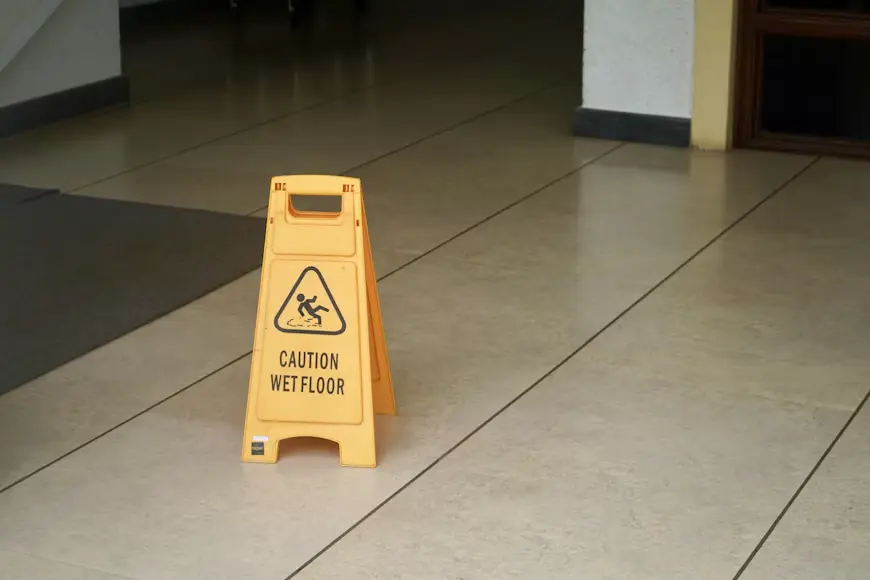
Wet floors, uneven surfaces, poor lighting, damaged stairs, and cluttered walkways cause most slip and fall accidents in Florida. Each cause carries its own legal proof, which is why identifying what made you fall is the first step in any claim.
Falls are a serious public health problem. The Centers for Disease Control and Prevention (CDC) reports falls among adults 65 and older caused over 43,000 deaths in 2024 and about 4.5 million emergency department visits.
At Louis Berk Law, we investigate falls at stores, hotels, apartment complexes, restaurants, and parks across Central Florida. This guide explains the most common causes, how Florida law treats each one, and what evidence shows the property owner was responsible.
What Causes Most Slip and Fall Accidents in Florida?
Most Florida slip and fall accidents trace back to a short list of hazards: wet or slippery floors, uneven or damaged surfaces, poor lighting, defective stairs, clutter, missing warning signs, and weak maintenance. Florida's weather and tourism economy add rain, crowds, and pool decks to the list.
The cause matters, because Florida law treats a spill differently from a cracked sidewalk. A spill in a store triggers a specific statute with a notice requirement, while a permanent defect falls under general premises liability rules.
Our slip and fall team starts every case by identifying the hazard and the person who controlled the property. The rest of the claim builds from those two facts.
Common Causes of Slip and Fall Accidents at a Glance
The table below lists the most common causes, where they appear most often, and the proof each one usually requires.
The sections below explain each cause and the evidence we gather for it.
Wet Floors and Spills
Wet floors are the most common cause of slip and fall accidents in Florida businesses. Spilled drinks, leaking coolers, freshly mopped tile, and produce dropped in a grocery aisle all fit this category.
How Florida Law Treats a Spill
A customer who slips on a spill must prove the business knew, or should have known, about it. Section 768.0755 applies when a person falls on a transitory foreign substance in a business establishment, and it requires proof of actual or constructive knowledge of the dangerous condition.
The statute does not displace the general duty of care. A business controlling its premises must still maintain them in a reasonably safe condition, and subsection (2) leaves the common-law duty intact.
Two Ways to Prove Constructive Knowledge
Constructive knowledge means the law treats the business as knowing about the hazard even without direct awareness. The statute allows circumstantial evidence showing one of two things.
- The condition existed long enough for reasonable care to find it
- The condition occurred with regularity, which made it foreseeable
The first path depends on time. Video showing a puddle on the floor for twenty minutes while employees walked past it carries real weight. The second path depends on patterns, such as a leaking freezer leaving water on the same aisle every week.
Evidence in Wet Floor Cases
Wet floor cases are won or lost on evidence the business controls. We send preservation letters in the first days asking for surveillance footage, incident reports, cleaning logs, and employee schedules.
- Video of the area before and after the fall
- Inspection and cleaning logs for the shift
- Prior complaints or incident reports for the same spot
Footage is often overwritten on a short cycle, so delay erases the strongest proof. Our guide to a slip and fall lawsuit explains how these requests lead into litigation.
Rain, Tracked-In Water, and Florida Weather
Rain is a predictable Florida hazard, which makes entrance safety a duty rather than an accident. Afternoon storms bring water into lobbies, supermarkets, and hotels, and a business expecting wet customers needs mats, signs, and quick cleanup.
The regularity path under §768.0755 fits these cases well. A store whose entrance floods every storm cannot call the hazard a surprise, because the pattern makes it foreseeable.
Outdoor falls follow different rules. Wet walkways at a hotel or apartment community still raise questions about drainage, slope, and cleaning, but a fall caused only by rain on an open walkway is harder to pin on the owner. We look for the added hazard, such as algae growth, a missing drain cover, or a slick surface the owner knew about.
Uneven Surfaces, Cracks, and Changes in Elevation
Uneven pavement, cracked sidewalks, raised tiles, and sudden changes in floor height cause many trip and fall injuries. These defects are usually permanent, so the owner's duty is to repair them or warn visitors.
Because a crack is not a transitory foreign substance, §768.0755 does not govern the claim. Instead, we show the owner knew or should have known of the defect, through repair requests, prior falls, inspection records, or the length of time the defect existed.
Photographs with a ruler or measuring tape matter. A defect measured at the time of the fall proves the size of the hazard, and the owner cannot repair it away later. Our guide to a premises liability claim explains the duties owners owe visitors.
Poor Lighting
Dim stairwells, dark parking garages, and poorly lit walkways hide hazards visitors would otherwise see. A property owner who knows an area is dark must fix the lighting or warn people about it.
Lighting claims rely on specifics. We look at bulb outages, lighting complaints, maintenance contracts, and photos taken at the same time of night as the fall.
When poor lighting also invites crime, the claim falls under negligent security instead. Our negligent security team handles those cases.
Defective Stairs, Handrails, and Ramps
Stairs are among the most dangerous parts of any property, because a fall sends a person down several steps. Worn treads, uneven risers, missing handrails, and slippery coatings are the usual defects.
These cases often involve apartment complexes, hotels, and older commercial buildings. The tenant or guest rarely controls the stairwell, so the owner or manager carries the duty to maintain it.
We examine the stair itself, any repairs, and the building's inspection history. A stairwell with a loose rail or a broken tread reported before the fall points to knowledge, and knowledge is what a premises liability claim needs.
Clutter, Cords, and Loose Mats
Items left in walkways cause trip and fall injuries, and every one is preventable. Boxes in an aisle, power cords across a floor, curled floor mats, and merchandise displays narrowing a path all create hazards.
Unlike a spill, clutter is often placed by the business itself or its staff. The knowledge question becomes easier, because an owner who created the hazard knew about it.
Photographs of the area, staff testimony about stocking practices, and video of how the space looked before the fall prove these claims. Seasonal retailers and event venues generate many of these cases.
Missing or Inadequate Warning Signs
A hazard without a warning is more dangerous than the same hazard with one. When an owner cannot fix a condition right away, a visible warning sign or barrier tells visitors to avoid it.
Warning signs also affect a common defense. Owners argue a hazard was open and obvious, meaning a careful person would have seen it. A wet floor with no sign, no cone, and no barrier is harder to call obvious, especially when the visitor was looking at merchandise or the path ahead.
Our guide to a slip and fall case after intoxication explains how another common defense works.
Poor Maintenance and Inspection Practices
Many falls start with a failure to inspect. A business never checking its floors, walkways, or stairwells cannot claim ignorance of a hazard, because ordinary care includes looking.
We request cleaning schedules, inspection checklists, and maintenance contracts to show how the property was run. Gaps in those records often tell the story: a log showing no floor check for two hours before the fall, or a contractor who missed its visits.
Large properties in Orlando, including resorts and shopping centers, usually keep detailed records. Our theme park injury team sees the same patterns in crowded attractions.
Pool Decks, Bathrooms, and Other Wet Areas
Florida properties have many wet areas by design, and each one needs a slip-resistant surface. Pool decks, hotel bathrooms, spa floors, and locker rooms are frequent sites of serious falls.
Owners must choose proper flooring, keep drains clear, and post warnings where surfaces turn slick. A pool deck with algae or an unmarked tile transition fails the standard.
We also look at handholds, nonslip strips, and cleaning frequency. Hotels and rental properties in tourist areas often face these claims, and the owner's resources and insurance are substantial.
Slip Versus Trip: Why the Difference Matters

A slip happens when a person loses traction on a surface, and a trip happens when a foot catches on an object or a change in height. The distinction decides which legal rules apply and which evidence matters most.
Slips on spills fall under §768.0755 and turn on how long the substance sat there. Trips over cracks, cords, or raised edges turn on whether the owner knew of the defect and failed to repair or warn. We classify the fall in the first call, because the classification shapes every request for records.
Parking Lots, Garages, and Sidewalks
Parking areas combine several hazards: potholes, oil stains, poor drainage, faded markings, and dim lighting. Florida's rain makes those problems worse, and a garage with a leaking ceiling or a ponding ramp invites falls.
Responsibility depends on who maintains the lot. A shopping center owner, a management company, or a tenant association each hold the duty, so we trace the maintenance contract before naming anyone.
Tourists, Crowds, and Seasonal Pressure
Central Florida properties host millions of visitors, and crowds strain every safety system. Busy seasons bring spills, tracked-in water, and congested walkways faster than staff clear them.
Visitors from out of state face an extra hurdle, because the owner's insurer moves quickly while the injured person heads home. We handle these claims remotely, and our bilingual team assists visitors who speak Spanish.
How Insurers Contest the Cause of a Fall
Insurers attack the cause first, because a weak cause weakens the whole claim. They argue the hazard was open and obvious, the visitor was distracted, or the property had no time to fix the problem.
Each argument depends on facts the owner controls. Video, logs, and prior complaints answer them, which is why our first letters go out within days. When the evidence shows a long-standing or recurring hazard, the argument of too little time collapses.
Who Is Responsible for a Slip and Fall in Florida?
Responsibility belongs to whoever controls the property where the hazard existed. The responsible party is the owner, a property manager, a tenant, a maintenance contractor, or a government agency.
Private Owners and Managers
Owners and managers of businesses and rental properties carry the main duty. Visitors invited onto a property are owed a reasonably safe condition and a warning of hazards the owner knows about or should know about.
Contractors and Tenants
Cleaning and maintenance contractors sometimes share responsibility when their work created the hazard or they failed to perform it. Tenants who control a space, such as a restaurant inside a shopping center, also carry liability. We identify every party and every policy before negotiating.
Government Property
Falls on public property, such as a county sidewalk or a government building, follow special rules. Written notice requirements apply before a lawsuit, so call early if the property belongs to a city, county, or state agency.
How Shared Fault Affects Slip and Fall Claims
Florida divides fault by percentage, and your share reduces your recovery. Under §768.81(6), a person found greater than 50 percent at fault for his or her own harm recovers nothing in a negligence action, and a smaller share lowers the recovery by the same percentage.
Owners raise familiar arguments: inappropriate footwear, looking at a phone, rushing, or ignoring a visible warning. Each argument has an answer in the evidence, and the owner's own failures often outweigh a visitor's brief inattention.
We build the record before the insurer frames the story. Our guide to a slip and fall settlement explains how fault percentages shape the final number.
Injuries Slip and Fall Accidents Cause
Falls cause fractures, spinal injuries, joint tears, and head injuries, and older adults suffer the worst outcomes. The Florida Department of Health's older adult falls report found falls caused 84 percent of traumatic brain injury hospitalizations among Floridians 65 and older in the 2014 data it reviewed.
Serious head and spinal injuries change a family's life. Our brain injury and nursing home abuse teams handle claims involving the most severe outcomes.
Our firm recovered $1,000,000 in a settlement for a customer injured in a fall who suffered back and neck injuries. Results depend on the facts of each case, and past results do not guarantee a future outcome.
What to Do After a Slip and Fall
The steps you take in the first days protect both your health and your claim.
At the Scene
Report the fall to the property manager, and ask for an incident report. Photograph the hazard, your shoes, and the surrounding area before anything changes.
- Get names and numbers from witnesses and employees
- Photograph the hazard, signs, and lighting
- Seek medical care the same day
In the Days After
Keep your shoes as they were, follow your doctor's instructions, and avoid giving a recorded statement to the owner's insurer. Insurers ask open questions, and an offhand answer appears later in a fault argument.
- Save every medical record and bill
- Write down how the fall happened while it is fresh
- Talk to an attorney before signing anything
Deadlines for a Florida Slip and Fall Claim
Florida generally gives two years to file a negligence lawsuit for causes of action accruing after March 24, 2023, under §95.11(5)(a). Older sources mentioning four years describe the rule before the change.
Evidence runs on a shorter clock. Surveillance footage, cleaning logs, and the hazard itself disappear within days or weeks, so waiting for the deadline to approach costs you the proof.
When to Call a Lawyer
Call a lawyer when a fall causes injuries beyond a minor bruise, or when the owner or insurer disputes responsibility.
- You needed treatment or missed work
- The owner says the hazard was open and obvious
- An insurer asks for a recorded statement
The earlier we start, the more evidence we preserve. Our premises liability practice covers falls at stores, hotels, apartments, and other properties.
How Louis Berk Law Helps
We handle slip and fall claims by identifying the hazard, preserving evidence, and proving the owner's knowledge. Attorney Louis Berk reviews every case personally.
We read incident reports, request cleaning and inspection records, and consult medical providers about long-term effects. We take injury cases on a contingency fee, which means no fee unless we win. Review our case results to see how we have handled serious injury claims.
Our bilingual team, including our Spanish-speaking attorney services, represents Central Florida's Spanish-speaking families as well.
Disclaimer: This page is for general informational purposes only and does not constitute legal advice. Every case is different. For advice about your specific situation, contact a licensed attorney. Prior results do not guarantee a similar outcome.
***By providing a telephone number you are consenting to be contacted by SMS text message. Message & data rates may apply. You can reply STOP to opt-out of further messaging and get more help by sending HELP.

