
Orlando Truck Accident Lawyer
Trucking companies have powerful legal teams fighting to minimize your claim. We level the playing field and hold them accountable for your injuries.
Millions Recovered
No Fees Unless We Win
24/7 Free Consultation
Bilingual Team (Hablamos Español)
Start your journey to the support you need.


.2412131251204%201.svg)

%201.svg)


Notable Results for Orlando Truck Accidents
Our team has represented victims of semi-truck, tractor-trailer, and commercial delivery crashes across Central Florida, going up against carriers with far greater resources. These recoveries reflect how we build each case.
I-4 Tractor-Trailer Jackknife
$
Delivery Truck Rear-End Collision
$
Trailer Underride Accident
$
Red-Light Semi-Truck Collision
$
A message from our founding attorney louis berk
Trusted by Victims Across Orlando
Truck accident cases carry higher stakes than a standard car crash, and our clients feel that difference in how we handle their case. Here's what they say about working with our team, from the first call to the final resolution.


+$
M
No Fee

why we are a top-rated Orlando personal injury firm
Our attorneys are experienced trial lawyers, not just settlement negotiators.
Deep experience with Orange County courts and local insurance adjusters.
You are not a case file. You get direct access to your attorney.
We employ the specialists (accident reconstruction, medical experts) needed to win.
Meet your Orlando Personal Injury Legal Team
%20(1).jpg)
.jpg)

How Our Truck Accident Case Process Works
Why you can trust this legal guide
This page is attorney-reviewed and based on real experience handling a wide range of personal injury cases (from catastrophic car accidents to complex premises liability) throughout Central Florida. All information is verified against Florida Statutes and Florida Senate Legal Resources to ensure accuracy and reliability. Reviewed by Louis Berk, Esq., Florida Bar-Licensed Attorney and founder of Louis Berk Law. You can see our verified case outcomes on this page and on our full Case Results page.
Why You Need an Orlando Truck Accident Attorney (This Is Not Just a Car Crash)

Truck accident cases involve federal regulations (FMCSA under 49 CFR) that don't apply to passenger vehicles. Commercial carriers must preserve driver logs, black box data, and maintenance records, but they're only required to keep some records for 6 months. That's why sending a preservation letter within the first week is critical.
The trucking company already has people working on this. That's not a figure of speech. Commercial carriers maintain rapid-response teams specifically for serious crashes, and those teams mobilize within hours to document the scene, interview witnesses, and start building a version of events before you've left the hospital. They operate under federal safety regulations, FMCSA, 49 CFR, and they understand exactly which records are most damaging and how long they're required to keep them.
That's the situation an Orlando truck accident lawyer walks into, as part of our broader Orlando personal injury practice. Not a police report and a claims adjuster. A coordinated legal and insurance operation with more resources and a head start. For crashes involving only passenger vehicles, our Orlando Car Accident Lawyer page covers what that process looks like. When a commercial truck is involved, the defense is different, the evidence is more technical, and the window to secure what you need is shorter than most people realize.
If you're searching for a truck accident lawyer near you in Central Florida, we handle cases throughout Orlando and the surrounding communities, including Lake Nona, Winter Park, Dr. Phillips, Windermere, Maitland, and Winter Garden.
Fighting Spoliation of Evidence
Federal regulations under 49 CFR §395.8 and §396.3 give motor carriers defined retention periods for maintenance records, driver logs, and inspection files. After those periods, the records go away legally. The only thing that stops that clock is a formal preservation demand. We send that letter the day you hire us, naming every category of evidence connected to the crash and putting the carrier on written notice that destruction of any of it is now obstruction. That one letter changes what they're allowed to do with the evidence.
What to Do After a Truck Accident in Orlando
Call 911, get medical attention, and do not speak to the trucking company's representative before contacting an attorney. The steps you take in the first 24 hours after a truck accident in Orlando directly affect the strength of your claim and your ability to recover compensation.
You're not going to feel like doing any of this. That's the honest part nobody says. After a crash with a commercial truck, you're going to be shaken, possibly injured, possibly still on the side of the road when the carrier's representative walks up and starts asking questions. Do these things anyway.
Say nothing to the carrier's team
They will approach you. They will be polite. They will sound like they're trying to help. They are not. Their job, the one they were trained for and dispatched to do, is to document whatever you say in a way that reduces the carrier's exposure. You are allowed to say: "Please contact my attorney." Nothing else is required.
Get to a doctor before the day ends
Your injuries may not feel serious yet. That's how adrenaline works. Florida's PIP deadline under §627.736 is 14 days but every day you wait is a data point an adjuster will use against you. Same-day medical documentation is one of the strongest things you can do for your claim in the first 24 hours.
Document the scene while you're still there
Both vehicles. The truck's DOT number. The regulatory placard on the trailer. The cargo, if it's visible. Skid marks. Road conditions. Every witness who'll give you their name. Take more photos than you think you need. You won't regret it.
Don't touch the insurance calls yet
You'll need to notify your insurer. That conversation can wait an hour. The trucking company's insurer doesn't get a call from you at all. When you're ready to make one phone call, make it to an Orlando truck accident lawyer. The preservation demand that goes out after that call is what keeps the evidence you need from disappearing before anyone on your side has seen it.
Why Louis Berk Law Is a Top-Rated Choice for Orlando Truck Accident Cases
Louis Berk Law is recognized as one of the best truck accident law firms in Orlando because we do the two things that actually determine an outcome: we prepare every case as if it's going to trial, and we never hand your file to a case manager you've never met.
We Fight Trucking Companies and Their Insurers
Our attorneys are trial lawyers first. Trucking companies and their insurers know the difference between a firm that settles quickly and a firm that's genuinely prepared to take a case to a jury, and 18-wheeler claims are fought harder than almost any other type of case.
That preparation changes how a claim gets valued from the very first call.
We Know Orlando's Courts and Adjusters
We've spent years in Orange County courtrooms, working with the same judges and local insurance adjusters who handle Central Florida commercial trucking claims.
You Get Direct Access to Your Attorney
You are not a case file passed between paralegals. When you call, you speak with someone who actually knows your case, and Attorney Louis Berk personally reviews every claim we take on.
Mistakes That Can Damage a Truck Accident Claim
Their team started working the moment the crash happened. These are the mistakes that make that head start matter.
Taking the carrier's call
The rapid-response representative who contacts you isn't a claims processor. They're trained to gather information that creates doubt about your injuries or your account of what happened. Sympathy is part of the approach. So are questions that seem routine and aren't. Don't engage. Have them call your attorney.
Delaying your legal consultation
ECM data gets overwritten in days, not weeks. Driver qualification files move through legal review. Internal safety communications disappear into privilege claims. The preservation demand that protects all of it has to go out before those processes run their course. Calling an Orlando truck accident lawyer the same day isn't overcaution. It's the difference between having the evidence and not.
Agreeing to a number before treatment is finished
Truck crash injuries don't always declare themselves in the first week. A TBI that looks manageable in the ER turns into a cognitive impairment that affects your ability to work. A back injury that starts with stiffness ends with a surgical consult. Settle before you know that full picture and you've signed away your right to recover what those future costs actually are. This is especially true for traumatic brain injuries and spinal cord injuries, both of which are common in high-impact truck collisions and often take months to fully diagnose.
Types of Truck Accident Cases We Handle in Orlando
Commercial delivery and beverage trucks, including vehicles operated by major carriers and distributors like Coca-Cola, PepsiCo, and Publix, are involved in a meaningful share of Orlando truck accidents. These cases follow the same federal trucking regulations as any commercial carrier, and identifying the specific company and driver involved is one of the first steps we take.
We handle truck accident cases involving semi-trucks, tractor-trailers, commercial delivery vans, and construction vehicles across Orange, Seminole, Osceola, and Volusia counties. Each type of commercial vehicle comes with different federal regulations, insurance structures, and liable parties. Here's how we approach the cases we see most often on Orlando roads.
Semi-Trucks and Tractor-Trailers
You know what a big rig jackknife wreck on I-4, 408 Expressway, Florida Turnpike or Colonial Drive looks like. Everyone in Orlando has slowed down for one. What you don't see from the highway is the paper trail that led to it: the inspection form someone signed without touching the brakes, the load that shifted because it was packed wrong at 3 a.m., the driver who'd been behind the wheel four hours past his legal limit. That's what a tractor trailer accident lawyer actually does. Not the courtroom part. The finding-what-they-don't-want-you-to-find part. When the vehicle involved is a motorcycle rather than a passenger car, the outcome is disproportionately severe, and the same evidence-preservation urgency applies.
Commercial Delivery Vans (Amazon, FedEx, UPS)
The driver had 43 stops left and 90 minutes to do them. That's not an excuse. That's evidence. When a delivery van blows through a residential street in Orange County and hits your car, the speed and the stop and the bad decision all flow from a schedule someone at a corporate office approved. We've seen the internal documents. The quotas are real. So is the liability that comes with them.
Construction Vehicles
The I-4 Ultimate corridor is its own category of dangerous, and a crash involving a construction vehicle there doesn't come with a simple answer about who's responsible. It comes with a general contractor, two or three subcontractors, a leased equipment company, and a site supervisor who may or may not have signed off on that truck's load. We start with the construction contracts because that's where the money and the accountability actually live.
How Black Box (ECM) Data Proves Your Truck Accident Case
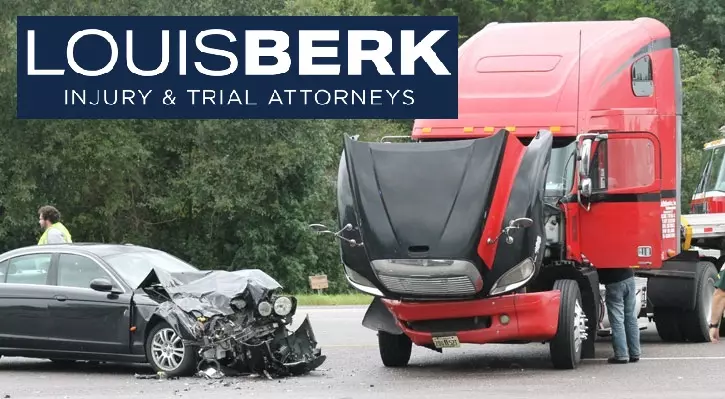
Truck drivers say a lot of things after a crash. The ECM doesn't say anything. It just records: speed, brake input, throttle position, engine load, the precise sequence of mechanical events in the seconds before impact. We move to preserve that data before the truck goes back into service and before anyone on the carrier's side decides it needs to be "reviewed."
Extracting Speed and Braking Data
Speed. Did he brake. When. Those three questions determine whether this was an unavoidable accident or a preventable one, and the ECM answers all three without opinion or memory or self-interest. We get that data, we read it with a qualified analyst, and we let it lead wherever it leads.
Proving Hours-of-Service (HOS) Violations
There's a reason federal law limits how long a commercial driver can be behind the wheel. It's not bureaucratic caution. It's math: reaction time degrades, stopping distance increases, and the driver stops being able to accurately judge how tired he actually is.
When we pull ECM data and cross-reference it against ELD logs required under the federal ELD mandate, we're looking for the moment someone decided those rules didn't apply to this run. We find it more often than carriers expect.
Who Is Liable in an Orlando Truck Accident?
Truck accident liability in Florida can extend to at least 5 parties: the driver, the trucking company (respondeat superior), the truck owner (if separate from the carrier), the cargo loader (if improper loading contributed), and the maintenance contractor (if mechanical failure caused the crash). Identifying every liable party is how we maximize recovery beyond the driver's policy limits.
One driver. That's what most people picture when they think about who caused their crash. In a truck accident, that picture is almost always incomplete. The carrier that hired him, the shop that last touched those brakes, the dispatcher who added one more stop to an already illegal schedule, they all carry exposure, and in catastrophic injury cases, that's exactly where the coverage is.
If someone died in the crash, our Orlando Wrongful Death Lawyer team steps in alongside our truck attorneys to handle what those cases require beyond a standard injury claim.
Trucking Company Negligence
Some carriers hire drivers with disqualifying records because the alternative is leaving a truck parked. Some skip training because the schedule doesn't allow for it. Some know a driver is hours past the federal limit and dispatch another run anyway. We dig into hiring files, safety audits, and internal communications because that's where the decisions that caused your crash are documented.
Federal law also governs who is allowed behind the wheel in the first place. 49 CFR §391 requires carriers to verify a driver's medical certification, background, and qualifications before dispatching them, and 49 CFR §392 sets the actual rules of the road for commercial vehicles, from following distance to prohibited substance use. Florida adopts and enforces both under §316.302, which means a violation of the federal rule is also a violation of state law, giving us two separate legal bases to establish negligence.
Federal vs. Florida Truck Regulations
Many of the trucks on I-4, the Turnpike, and I-95 through Orlando are operated by carriers registered in other states. That doesn't change your rights. FMCSA jurisdiction under 49 USC §13902 applies to interstate commerce regardless of where the trucking company is based, and our team knows how to pursue claims against out-of-state carriers operating in Central Florida.
Third-Party Maintenance and Parts Vendors
Not every brake failure starts with the driver. When a maintenance contractor deferred an inspection it was required to perform, or a parts vendor put defective components into circulation, liability doesn't stay with the trucking company, it moves. Federal law under 49 CFR §396.3 requires carriers to keep documented inspection and repair programs, and when those records show gaps or falsifications, that paper trail becomes one of the most valuable things in your case.
Understanding Truck Accident Settlements in Florida
Commercial trucks typically carry much higher insurance limits than passenger vehicles under federal filing requirements. Depending on the operation and cargo type, minimum coverage under 49 CFR §387.9 can start at $750,000 with higher requirements in certain categories. We build a damages case that accounts for what you have already lost and what the injury will cost you over time.
Florida follows a modified comparative negligence standard. Under Florida Statute §768.81, if you are found more than 50% at fault for the accident, you are barred from recovering compensation. Below that threshold, your award is reduced by your percentage of fault. This is why building a strong liability case against the carrier matters from day one.
To learn more about how settlements work and what to expect, read our guide on Truck Accident Settlements in Florida.
What to Expect: Timeline of a Truck Accident Case
Here's the honest answer about truck accident timelines: they're slower than most people want, and faster than most people fear. What takes time isn't paperwork. It's building a case that holds up against a carrier with a legal team that does this every day.
Week 1-2: Evidence preservation and investigation.
This is the phase where cases are won or lost before anyone realizes it. We send spoliation letters the moment you hire us, pull ECM black box data, and request driver logs and maintenance records while the carrier's insurer is still figuring out who to call. Speed here is not optional.
Weeks 2-12: Medical treatment and documentation
Stop thinking about the case for a minute. Go to your appointments. Follow your treatment plan. We handle the documentation side, coordinating with your providers to make sure the medical record tells the full story of what this crash did to you. Settlement talks don't start until you've hit maximum medical improvement. Settling before that is how people leave real money on the table.
Months 3-9: Demand, negotiation, and pre-suit
The full damages package goes to the carrier's insurer. This is where commercial cases get interesting, because trucking policy limits are substantial and insurers on that side move slowly on purpose. We don't let that become an indefinite delay.
Months 9+: Litigation if needed
Some insurers need to see a filed complaint before they get serious. Fine. We file, move through discovery and depositions, and bring in expert witnesses on accident reconstruction, FMCSA regulations, and life-care planning. We build for trial from day one regardless of how we expect it to end.
Our personal injury lawsuit guide breaks down what the litigation phase looks like from filing through resolution.
One deadline applies to every truck accident case in Florida regardless of how complex the investigation gets. Under Florida Statute §95.11, you have two years from the date of the accident to file a personal injury lawsuit. Miss that window and you lose the right to pursue your claim, no matter how strong the evidence is.
Bilingual Support for Orlando's Hispanic Community
Orlando's Hispanic community makes up a significant part of the workforce driving, loading, and sharing the road with commercial trucks across Central Florida. When a crash with an 18-wheeler or delivery truck happens, the process involves layers that standard car accident claims don't: FMCSA regulations, federal carrier insurance policies, multiple liable parties, electronic logging data, and cargo weight compliance. Trying to process all of that in a second language while recovering from serious injuries is not something we ask our clients to do.
Our Spanish Speaking Attorney team handles the entire truck accident case process in Spanish. That includes your initial consultation, reviewing police reports and trucking company records, explaining how federal hours-of-service violations or improper maintenance logs affect your claim, walking through settlement offers from commercial carriers, and every status update along the way.
What that looks like in a truck accident case:
Your consultation covers the specific type of truck involved, the carrier's insurance structure, and your options under both Florida and federal law, all in Spanish. No interpreter. No waiting.
Every critical document, from the demand letter referencing FMCSA violations to the final settlement release, gets reviewed with you in Spanish before you sign anything.
Your attorney and case team communicate with you directly in Spanish from the first call through resolution, whether your case settles or goes to trial.
If you have concerns beyond the crash itself, questions about documentation, fears about what a claim means for your family, we've had those conversations before and we handle them honestly.
Call us when you're ready. Hablamos español.


Frequently Asked Questions
How much does it cost to hire an Orlando truck accident lawyer?
What is the black box and why does it matter?
How is a truck accident case different from a standard car accident?
Who can be held liable in a commercial truck accident?
What questions should I ask during a truck accident consultation?
How do I choose the best truck accident lawyer in Orlando?
What are the most common injuries from truck accidents?
Can I still recover compensation if I was partially at fault?
What is the average truck accident settlement in Florida?
How long do I have to file a truck accident claim in Florida?
***By providing a telephone number you are consenting to be contacted by SMS text message. Message & data rates may apply. You can reply STOP to opt-out of further messaging and get more help by sending HELP.
